The 7-Second Reactions That Seal the Deal
- Team Pimentel

- May 30, 2025
- 4 min read
Most buyers decide how they feel about a home within seven seconds of walking through the front door. Before the kitchen is revealed. Before they know the square footage. Before the agent says a word.
That first impression hits hard—and it’s emotional. You don’t always notice it, but your body reacts before your brain has time to list pros and cons. Maybe it’s a sense of calm. Or maybe it’s a tension you can’t explain. Either way, something either clicks or it doesn’t.
Understanding these early reactions matters. Whether you’re buying your first home or your fifth, knowing what’s driving your instincts helps you stay focused—and find the home that actually fits.
Let’s look at the top three instant triggers that shape how buyers feel within the first moments of a showing.
The Entry Vibe
You step through the door. What hits you?
It’s not just the look of the entryway—it’s the feel. Light, temperature, smell, flow. Your senses scan everything instantly, even if you’re not aware of it. This is why homes with natural light, neutral scents, and open space tend to make stronger first impressions. They feel easy. Unforced. Comfortable.
But when you enter a home and something feels off—darkness, clutter, overwhelming air fresheners—it creates hesitation. Even if the rest of the home is perfect, that hesitation can linger.
A well-prepared entry says: this space is cared for. It tells buyers they’re welcome, that this might be a place where their life could unfold. And when that happens in the first few seconds, the rest of the showing has a positive head start.
What to look for as a buyer: Take a moment to check in with your body as soon as you enter. Are your shoulders relaxing or tensing? Do you want to explore, or are you already checking your watch? Your body knows what your mind hasn’t processed yet.
Eye-Level Impact
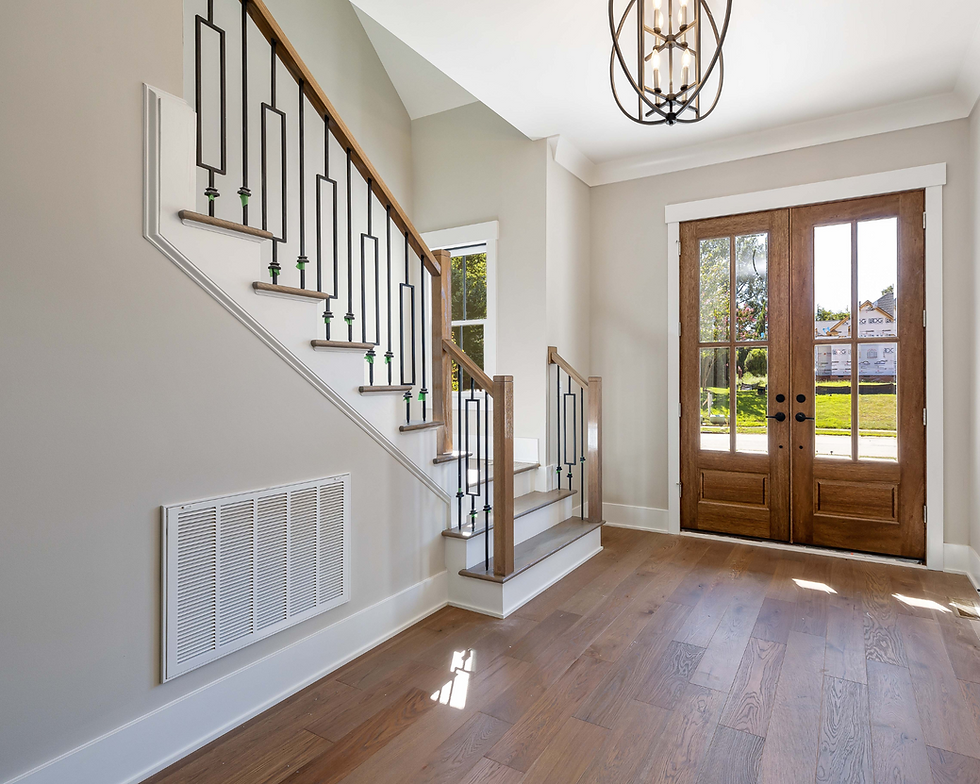
After the first impression, buyers instinctively scan what’s directly in front of them and at eye level. This includes walls, lighting, finishes, windows, and sightlines into other rooms.
Without realizing it, you’re making judgments about how much light the home gets, how well it’s maintained, and how easy or expensive it might be to change. Clean lines, well-kept surfaces, and clear views allow you to relax. They give your mind permission to imagine living there.
This is also where small flaws can speak louder than they should. Scuffed baseboards, cracked paint, or broken blinds might be easy fixes, but they raise subconscious red flags. Your brain might start to wonder what else has been ignored. The opposite is also true: homes that are visually tidy and thoughtfully laid out create a sense of ease and trust.
What to look for as a buyer: Ask yourself, “Do I feel like I’m on edge or at ease?” The more at ease you feel, the more likely the home is aligning with your style, pace, and priorities. Then you can assess the details logically, rather than reacting to distractions.

“Could I Live Here?” The Instant Imagination Test
The strongest reaction a buyer can have is emotional attachment. It doesn’t take long. In many cases, it begins in a specific room—a sunny breakfast nook, a cozy den, a view through a window. That’s when the shift happens: you stop touring and start imagining.
This is called “emotional projection,” and it’s what drives serious interest. It’s also why some buyers make decisions faster than they expected. They walk into a home and something about it just feels like theirs. Not perfect—just right enough.
That moment is usually connected to lifestyle. The house speaks to a version of your daily rhythm that you want more of. More calm. More space. More light. More connection. Once your imagination takes over, it becomes harder to talk yourself out of the home—even when compromises exist.
What to look for as a buyer: When you catch yourself mentally placing your couch, picturing dinner with friends, or imagining your morning routine in a space—you’ve crossed into emotional decision-making. Take note. Then pause and ask: does this match my long-term needs, or is it just a powerful first impression? Both matter. Know which is which.

The home buying process is often framed as rational: budgets, inspections, square footage, school districts. And yes, all of that is essential. But the truth is, emotion sets the pace.
You react to a home long before you calculate its value. That doesn’t mean emotion should lead every decision. But it does mean those first seven seconds are worth understanding. They give you insight into what really matters to you.
Listen to your first reaction—but don’t stop there. Use it to guide deeper questions. Use it to notice what your instincts are trying to say. Because the best home for you isn’t just the one that works on paper. It’s the one that fits how you live—and how you want to feel.
When it’s right, you’ll know. But we’ll help you get there with clarity, confidence, and the kind of support that helps you trust your instincts and your decisions.
Work with Team Pimentel:
Start here: https://teampimentel.com/#work-with-us
Call: 833.541.1058
Text: 217.408.7029
Let’s find the one that feels like home—before your brain even catches up.


Comments